The Pollution We Don't See: Rethinking the Healthy Home

Why healthy home retrofit must go beyond energy efficiency
Matthew Goldschmied [copyright] 05 October 2026
We have begun to accept that the environment in which a person lives can be relevant to their health.
Great Ormond Street Hospital has even incorporated postcode-level air pollution data into children's medical records, allowing clinicians to consider environmental exposure alongside other clinical information.
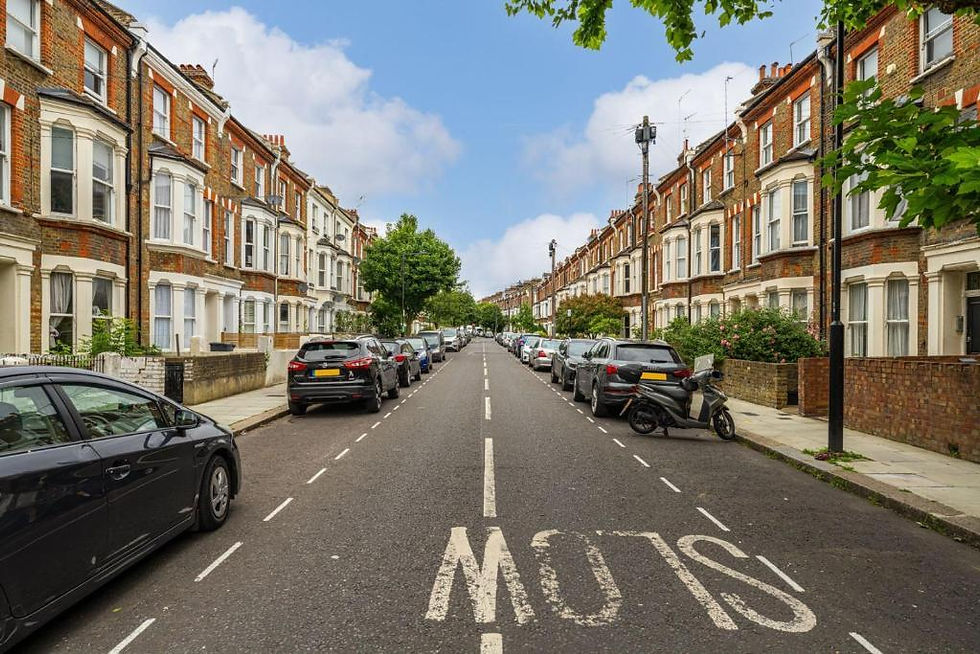
If we are prepared to ask what a child is breathing outside their home, shouldn't we also ask what they are breathing inside it?
For nine-year-old Ella Adoo-Kissi-Debrah, the effects of urban air pollution were ultimately overwhelming and lethal. Her death was a tragedy that helped expose the serious health consequences of air pollution and the need to understand the environments in which people live.
Where the source of an airborne pollutant is obvious and identifiable — car exhaust emissions in our public spaces, for example — it is relatively straightforward to develop policy and interventions to tackle it.
But what about the spaces that few people see?
Places that are meant to be our refuge. Secure places designed to shelter and protect us.
Our homes.
We spend around 90% of our time indoors, much of it in our own homes.
A home should be an environment in which humans thrive, not merely survive.
A healthy home should provide thermal comfort through winter and summer, good indoor air quality, appropriate humidity, natural daylight, acoustic comfort and protection from pollutants and biological contaminants.

Ideally, it should achieve these things without relying unnecessarily on energy-intensive mechanical systems to compensate for poor building design.
So how healthy are our homes?
In the UK, we are a very long way from having a national housing stock that consistently provides these conditions. Yet the policy trajectory is moving painfully slowly to address the complexity of the challenge.
Policy alone is not enough to deliver the retrofit interventions required, even if policy were designed to address all of the risks and failures that have brought us to where we are today.
Energy efficiency is not the same thing as health
A home can have excellent insulation and a good EPC rating while still suffering from condensation, poor ventilation, overheating, inadequate moisture management or poor indoor air quality.
Conversely, a building that performs well isn't necessarily one that requires the most technology.
Good design can reduce the need for mechanical intervention by working with the building's materials, orientation, thermal mass, ventilation and occupants.
This matters because buildings are not collections of independent components.
They are systems.
Changing one part of the system can alter the behaviour of the others.

Improve airtightness without understanding ventilation and moisture, and the internal environment can change.
Add insulation without understanding moisture movement and junctions, and the building can behave differently.
Increase glazing without considering solar gain and thermal mass, and summer overheating can become a problem.
Install mechanical systems to compensate for shortcomings elsewhere, and we can become increasingly dependent on technology to make an inherently poorly performing building comfortable.
We therefore need to stop simply asking how much energy a home uses and start asking:
How well does that home support human health, comfort and resilience?
The health of the building
The death of Awaab Ishak brought the consequences of unhealthy housing into painfully sharp focus.
His home was allowed to incubate a biological pollutant to which he was exposed throughout his short life. Forensic pathology identified granulomas and ruled out other causes, concluding that prolonged exposure to mould had contributed to his respiratory arrest.
Awaab's Law has changed the legal landscape for social housing. Since October 2025, landlords have been required to act within defined timescales when significant damp and mould hazards are identified. From 30 November 2026, the requirements will extend to a wider range of hazards, including excess heat and excess cold.
These are welcome measures.
But regulation alone cannot create healthy homes.
It can establish minimum obligations. It cannot, by itself, determine how we should design, retrofit and maintain buildings so that people can thrive within them.
Ventilation and moisture management are important, but they are only part of a much more complex and interdependent system.
That system includes the people who occupy the building, the way they use it, the climate outside, the building fabric, ventilation, heating and cooling, moisture, pollutants and the materials from which the building is made.
Are we choosing the best materials?
The materials we choose to build and retrofit our homes are increasingly being reconsidered for their suitability to provide safe and healthy internal conditions.
For generations, the industrialisation of chemical production has influenced the way buildings are constructed and modified. Petrochemical and energy-intensive products have become so commonplace that we often regard them simply as conventional.
But conventional does not necessarily mean optimal.
The health implications of material selection deserve consideration across the entire material lifecycle — manufacture, installation, occupation, deterioration and disposal — rather than being assessed, in the case of insulation, according to a single thermal performance metric and cost.

The environmental and health consequences of manufacturing materials don't necessarily disappear when those materials arrive on a building site.
Nor should material selection be reduced to a simplistic argument that one material is inherently “good” and another inherently “bad”.
The more important question is:
What are we asking a material to do, and what consequences follow from that choice?

Foamglass insulating subfloor base Woodfibre insulation in a timber frame Sisalwool flexible insulation Hemp insulation batts by Indinature
How does it manage moisture?
How does it behave when the building is heated and cooled?
What does it emit during manufacture, installation and occupation?
How durable is it?
What happens when it reaches the end of its useful life?
Does it work with the existing building or against it?
And, ultimately, does it contribute to a healthier, more resilient environment for the people who live there?
Rethinking building performance
Indoor and outdoor air quality cannot be considered entirely separately.
The same is true of energy, carbon, moisture, overheating, ventilation, materials, comfort and health.
They are characteristics of the same building.
We therefore need to broaden the definition of a high-performing home.
Energy efficiency matters.
Carbon matters.
Cost matters.
But so do indoor air quality, moisture, overheating, thermal comfort, material health, occupant wellbeing, durability and the ability of a building to adapt to a changing climate.
These aren't separate problems.
They are characteristics of the same building.
At RVI, we are developing systems and processes for renovation and retrofit that put these relationships at the heart of material and technical specification.
Natural, low-carbon and regenerative materials are sometimes perceived as unconventional or expensive.
But much of what we now regard as “conventional” construction has only become conventional over the last few generations.
Perhaps the proposition is not simply that we need to make healthier materials conventional.
Perhaps we need to ask a more fundamental question:
What should “conventional” mean?
This is not simply an argument for different materials.
It is a challenge to the mainstream definition of building performance.
Matthew Goldschmied [copyright]
October 2026


Comments